Understanding Scoliosis: Why the Schroth Method with an Osteopath Could Help
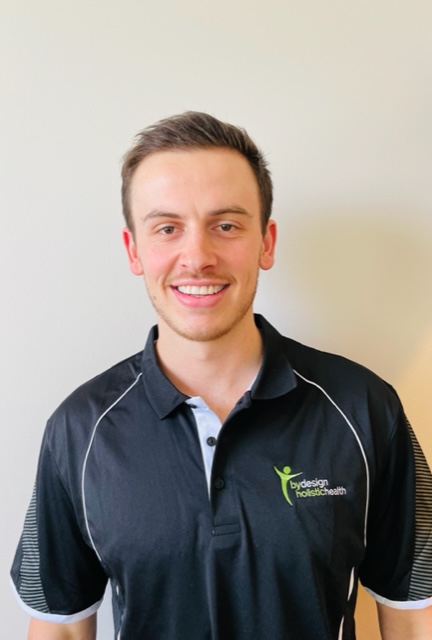
If you or someone you love has been told “you have scoliosis,” it’s natural to have questions — what does this actually mean for daily life, will it get worse, and what can realistically be done about it? While scoliosis can’t always be “fixed” in the way people hope, there’s a well-researched, non-surgical approach called the Schroth Method that’s helping many people manage their curve, ease discomfort, and move with more confidence. At BDHH, Dr. Sam Dyer uses Schroth-informed exercise and manual therapy together to support people with scoliosis at every stage of life.
What is scoliosis?
Significant scoliosis is a three-dimensional curvature and rotation of the spine, usually diagnosed when an X-ray shows a curve of more than 10 degrees. It affects an estimated 2–3% of people worldwide, and while it’s most commonly picked up in adolescence (adolescent idiopathic scoliosis, or AIS), it can also develop — or simply be noticed for the first time — in adulthood. 85% of people don’t have a straight spine, but these can be managed quite easily.
Scoliosis doesn’t look or feel the same for everyone. Some people have a mild curve with no symptoms at all, picked up incidentally. Others experience visible postural changes, uneven shoulders or hips, muscular tightness on one side of the body, or pain that builds up over time as the body compensates for the curve. Severity, age, and curve pattern all shape what the right approach looks like.
What is the Schroth Method?
The Schroth Method is a scoliosis-specific exercise approach developed nearly a century ago in Germany and refined ever since. Rather than treating the spine as a simple side-to-side curve, Schroth-based exercise looks at scoliosis as a genuinely three-dimensional problem — involving rotation and changes in breathing mechanics, not just a sideways bend.
In practice, this means:
- Corrective breathing — using specific breathing patterns to help expand the collapsed side of the ribcage and encourage a more balanced trunk.
- Postural retraining — teaching the body what a more “corrected” posture feels like, and building the strength and body awareness to hold it during everyday activities, not just during a treatment session.
- Individualised exercises — because every curve pattern is different, a Schroth-based program is built around yourspecific curve, not a generic scoliosis routine.
What does the research actually say?
It’s worth being upfront: no exercise program can straighten a spine like surgery can, and outcomes vary depending on age, curve size, and how consistently a program is followed. That said, a growing body of research — including several systematic reviews and meta-analyses — has found that Schroth-based exercise can meaningfully reduce the angle of trunk rotation, provide a modest reduction in Cobb angle (the standard measure of curve severity), and improve quality of life for people with adolescent idiopathic scoliosis, particularly in the short to medium term. For adults, the goals tend to shift slightly — less about changing the curve itself, and more about reducing pain, improving flexibility, and building better movement patterns for daily life.
In short: the evidence supports Schroth-based exercise as a genuine, safe, conservative option worth considering — not a guaranteed cure, but a well-founded tool.
Why see an Osteopath for this?
Schroth-based exercise is typically most effective when it’s paired with a broader understanding of how someone’s whole musculoskeletal system is working together — which is exactly where osteopathy adds real value.
Osteopaths are trained to assess the body as an interconnected system. When it comes to scoliosis, that means looking beyond the curve itself to:
- Assess compensations elsewhere in the body — tight hips, an uneven pelvis, restricted rib mechanics, or altered gait patterns that often develop alongside a scoliotic curve.
- Use hands-on manual therapy — to ease muscular tension, improve joint mobility, and support the postural changes Schroth-based exercises are working to create.
- Take a whole-person view — considering how scoliosis interacts with pain, sleep, activity levels, and daily function, not just the shape of the spine on an X-ray.
- Build a program that evolves with you — reviewing and adjusting your exercises as your body responds, rather than a “set and forget” plan.
This combination — manual therapy to prepare and support the body, alongside a structured, Schroth-informed exercise program — means the corrective work isn’t happening in isolation. Your body is better prepared to actually use and hold the new movement patterns you’re learning.
Who is Schroth-based Osteopathic care suitable for?
- Adolescents with a newly diagnosed or progressing curve (often alongside monitoring or bracing)
- Adults with a long-standing scoliosis who are experiencing new or worsening discomfort
- Anyone who has been told “there’s nothing to do but watch and wait” and wants to explore an active, evidence-informed option
- People preparing for, or recovering from, scoliosis surgery, as part of a broader care plan
Getting started
A thorough postural and movement assessment is always the first step — every scoliosis curve is different, and a good program starts with genuinely understanding yours. If you’ve been diagnosed with scoliosis, or you’ve noticed postural changes that concern you, book in with one of our osteopaths to talk through whether a Schroth-informed approach is right for you.
This article is general information and isn’t a substitute for individual medical advice. If you have concerns about scoliosis, please speak with your GP, specialist, or one of our practitioners directly.