February News & Updates
In this update…
-
Practitioners back from break
-
Dietitian Focus
-
Feb/March Promotion – Superfoods & Allergy Support
-
Massage and Myotherapy appts both locations
-
Muscle strain v joint sprain

New online booking link is now live, for most allied health services at both clinics. Click here
Clinics back to full functioning after Christmas and January
Both Lilydale and Bayswater North clinics are open normal operating hours with all practitioners back on board after January holidays and break time. There are plenty of Osteopath and Naturopath appointments available with our fantastic practitioners. Remedial Massage and Myotherapy appointments continue to be very popular and Exercise Physiology group classes and individual appointments are filling up too. Our Dietitian, Emily is available Wednesday afternoons in Lilydale and Samantha Barton, is available for Orthoses consults on Monday and Thursday in Bayswater North.
Dietitian Focus
An accredited practicing Dietitian can help men and women and teenagers who are struggling with dietary or food challenges. Speciality areas include SIBO, coeliac disease, IBS, IBD and many other gastrointestinal conditions. Struggling with gut issues can impact more than just your digestion, it can affect your energy, mood, and overall quality of life. Emily Hummel is an Accredited Practising Dietitian with a Master of Dietetics and a strong passion for helping people manage conditions like IBS, IBD, SIBO, and many other gastrointestinal conditions with clarity and confidence. Using a realistic, evidence-based approach, Emily works with clients to reduce symptoms, rebuild trust in their bodies, and enjoy food again without fear or restriction. Health is not just about what you eat, but the joys your life brings including your social, emotional and physical health, and Emily is here to help you feel your best from the inside out.
Promotion – Superfoods & Allergy Support
Our birthday month is here, so all superfood products are 20% off, including Purabon balls, nutraorganics products, bone broths and spirulina. Nutraceutical support for your allergies, whether gut or airborne, are also on special the next two months, so take advantage of this offer. As always, come in and chat to a Naturopath if you need specific advice regarding allergies.
Remedial Massage & Myotherapy
Across both clinic locations, you can access professional and effective massage therapies and choose between Remedial Massage or Myotherapy, depending on your preference and type of massage you are after. Dry needling, cupping and relaxation massage is also available. Samantha is available on Mondays and Thursdays in Bayswater North and Adam and Nicole have appointments all week in Lilydale.
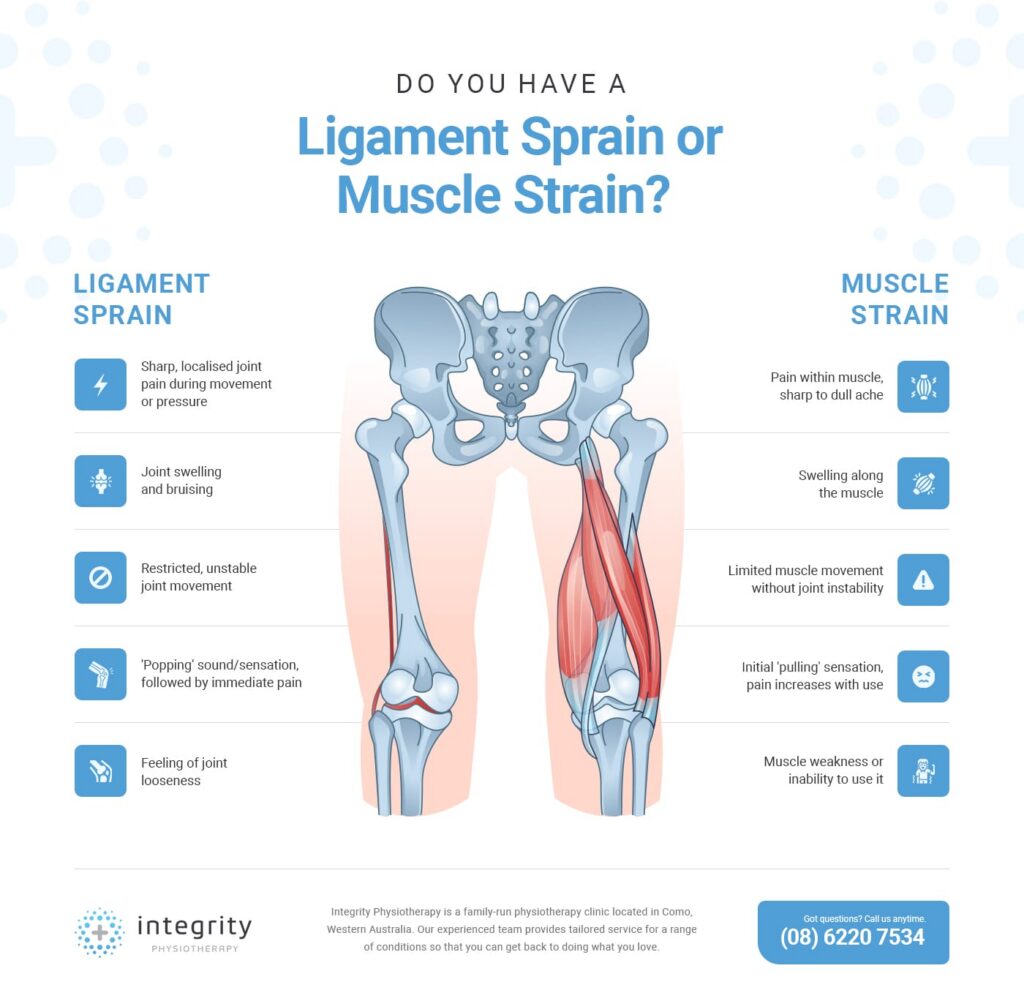
Muscle strain v Joint sprain
Here is some information to consider next time you hurt yourself and you can ask yourself some good questions depending on how you have injured yourself.
A muscle sprain is an injury to a muscle caused by overexertion or twisting.
A joint sprain is a common injury where ligaments are stretched or torn, usually caused by falls or twists. Key symptoms include immediate pain, swelling, bruising, and reduced, or unstable, joint function.
Joint sprains involve overstretched or torn ligaments (connecting bone to bone), while muscle strains affect muscles or tendons(connecting muscle to bone). Sprains often cause joint instability and bruising, whereas strains are characterized by muscle spasms, cramping, or pain within the muscle belly.
Some key differences include the tissue injured – sprains affect ligaments (e.g., ankle, knee) and strains affect muscles or tendons (e.g., back, hamstring). With the symptoms – sprains typically present with immediate swelling, bruising, and joint instability. Strains often involve muscle spasms, pain, and weakness. The cause – sprains occur when a joint is forced outside its normal range, such as twisting an ankle. Strains are usually caused by overexertion, lifting heavy objects, or repetitive motion.
Some similarities- both injuries cause pain, swelling, and reduced range of motion. They are generally managed initially with RICE (Rest, Ice, Compression, Elevation) to reduce pain and inflammation. For both, if pain is severe or functional limitation is significant, medical and allied health assessment is recommended.